
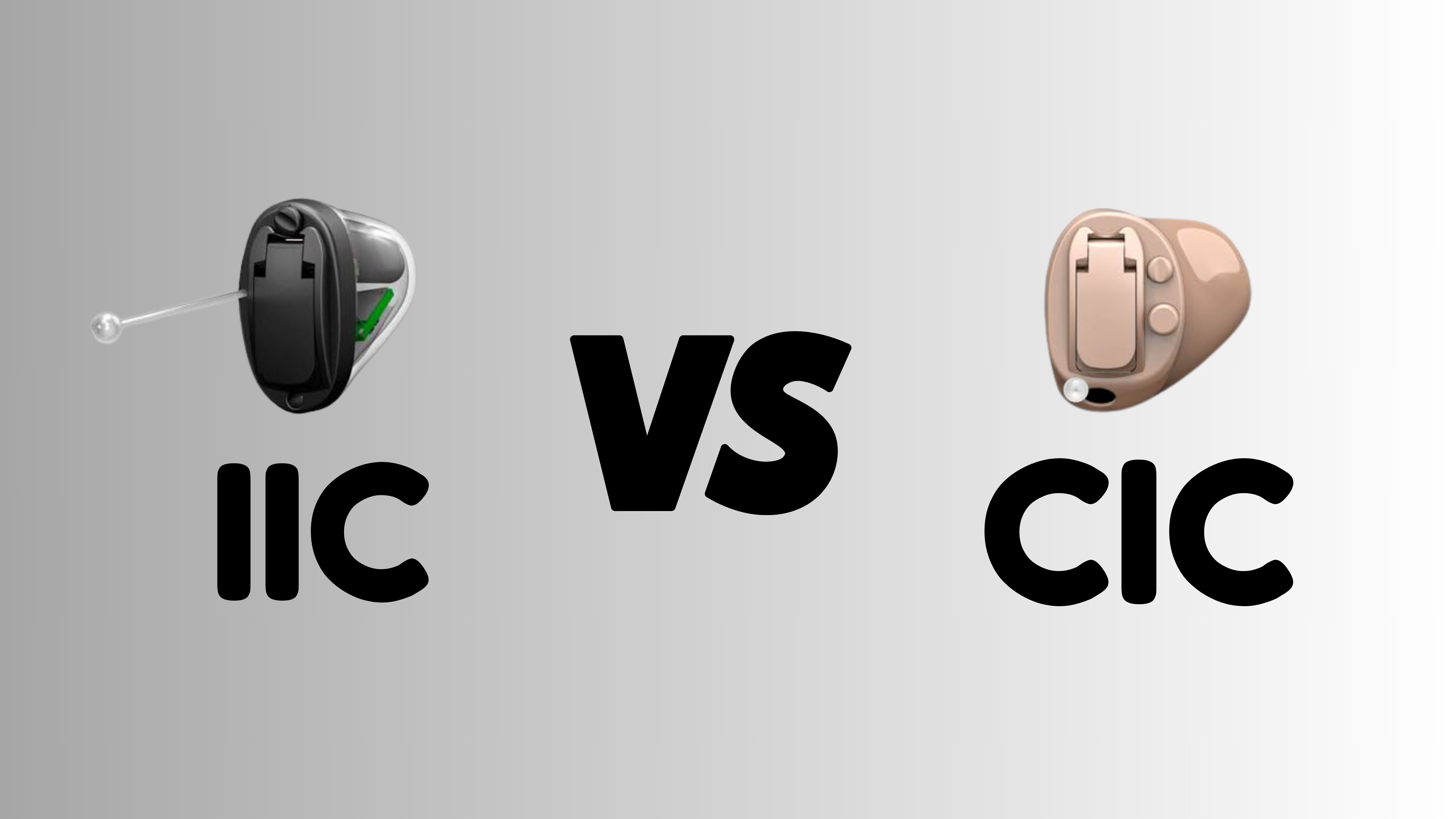
Invisible Hearing Aids in Bangladesh: CIC vs IIC | Price and Guide
Curious about a hearing aid nobody can see? Here is how CIC and IIC devices differ, who they suit, who they don't, and what to do first.
Reviewed by [Md. Mizan Ahmed, Hearing Aid Specialist], Digital Hearing Center.
Invisible hearing aids are tiny devices that sit inside the ear canal, so most people never notice them. The two main types are CIC (completely-in-canal) and IIC (invisible-in-canal). They suit many adults with mild to moderate hearing loss and ear canals large enough to hold them. They don't suit everyone. A hearing test and an ear check by an audiologist come first, and that check decides what will work for you.
If you are weighing a discreet option for yourself or for a parent, this guide covers how these devices work, who they fit, their honest drawbacks, and what to expect on price and fitting.
What are invisible hearing aids?
"Invisible hearing aid" is a popular name, not a strict medical category. It usually means a device small enough to sit inside the ear canal with little or nothing showing. Two styles get this label:
- CIC (completely-in-canal): Sits in the lower part of the ear canal. A small part may show at the opening, often with a tiny handle for removal.
- IIC (invisible-in-canal): Sits deeper in the canal. When fitted well, it is almost impossible to see from the side.
Both are custom-made. An audiologist takes an impression or scan of your ear, and the shell is built to match your canal.
How do CIC and IIC hearing aids work?
They work like any other hearing aid, only smaller. A microphone picks up sound. A chip amplifies it according to your hearing test results. A tiny speaker, called a receiver, sends it into your ear.
Because the device sits inside the canal, it uses the natural shape of your ear to collect sound. Many people find phone calls easier, since the phone sits against the ear in the usual way.
The small size has a trade-off. There is less room for a battery, extra microphones and wireless features. Your audiologist can tell you what a specific model offers.
CIC vs IIC vs RIC vs BTE: quick comparison
| Specification | IIC | CIC | RIC | BTE |
|---|---|---|---|---|
| Visibility | Almost invisible | Very discreet | Small, behind the ear | Most visible |
| Sits | Deep in the canal | In the canal, near the opening | Behind the ear, speaker in the canal | Behind the ear |
| Typical hearing loss | Mild to moderate | Mild to moderately severe | Mild to severe | Mild to profound |
| Handling | Needs good finger control | Needs some finger control | Easier to handle | Easiest to handle |
| Battery and features | Smallest, fewest features | Small, some features | More room for features | Most room for features |
| Suits narrow canals? | Often not | Sometimes | Usually yes | Yes |
Digital Hearing Center fits all four styles, so you can compare them on your own ear instead of choosing from a table.
Who invisible hearing aids suit
A CIC or IIC may be a good match if you:
- have mild to moderate hearing loss, confirmed by a hearing test
- have an ear canal with enough size and a suitable shape
- want a discreet look, perhaps for work, a shop counter, or a role where you meet people all day
- can handle very small devices with your fingers
- are comfortable with simple daily care
Everyday example: A teacher in Dhaka who finds it hard to follow whispered questions from the back of the class may like the idea of a device that students never notice.
Who they may not suit
Be wary of choosing by looks alone. These devices may not be the right choice if you:
- have severe or profound hearing loss, where more power is usually needed
- have narrow or unusually shaped ear canals
- have weak finger dexterity, poor eyesight, which make tiny batteries and parts hard to manage
- often get ear infections or have a lot of wax or discharge
- want features such as direct phone streaming or a manual volume control
Many people with these needs hear better with a RIC or BTE, and the larger styles are easier to clean and handle. Choosing a visible device is not a failure. The best hearing aid is the one that suits your ears and that you actually wear every day.
Honest pros and cons
Pros
- Very discreet, which can help if you feel self-conscious
- Phone calls often feel natural
- Little wind noise for many wearers
- Light and comfortable once your ear gets used to it
Cons
- Not suitable for every ear or every level of hearing loss
- Smaller battery, so it needs changing or charging more attention
- Fewer features than larger styles
- Wax and moisture can block the tiny speaker
- Small parts are harder to handle, especially for older hands
- Custom-made, so a poor fit means a remake
How much do invisible hearing aids cost in Bangladesh?
Anyone searching for the CIC hearing aid price in Bangladesh wants a number, and I'd rather not give you one I can't stand behind.
| Style | Brand and model | Price range (BDT) |
|---|---|---|
| CIC | Widex Evoke 50 CIC M | 48,000 |
| IIC | Bernafon Entra A IIC | 55,000 |
What affects the price:
- Brand and technology level. Higher levels handle noisy places like markets and family gatherings better.
- Style. Custom-made devices differ in cost from standard ones.
- Warranty and after-service. Ask what is included, such as fitting visits and adjustments.
- Number of ears. Many people with hearing loss in both ears benefit from two devices. Your audiologist will tell you whether that applies to you.
After your hearing test, we can give you a clear quote for the options that fit your ears. Ask what the price includes before you decide.
How fitting works
- Hearing test. An audiologist measures how well you hear at different pitches. Book a free hearing test.
- Ear check. The audiologist looks inside your ear for wax, infection or an unusual shape. If something needs a doctor's attention, we will tell you first.
- Impression or scan. For a custom device, we take a mould or scan of your canal.
- Making the device. The shell is built to match your ear.
- Fitting and programming. We set the device to your hearing results and check comfort.
- Follow-up. Most people need small adjustments in the first weeks. Come back, tell us what sounds too sharp or too quiet, and we will tune it.
Your brain also needs time. Sounds you haven't heard in years can feel loud at first. This is normal, and it usually settles with daily wear.
Care and maintenance
Dhaka's heat and humidity are hard on small electronics. A few habits go a long way:
- Wipe the device with a dry cloth each night.
- Brush or wipe the speaker opening gently, using the tools we give you.
- Store it in a dry case overnight. Ask us about a dehumidifying box.
- Keep it away from water, so remove it before a shower, wudu or swimming.
- Open the battery door at night so the battery can air out.
- Never push anything sharp into the speaker opening.
- Book regular check-ups so we can clean it professionally.
When to see a doctor first
Hearing aids are not the first step for every hearing problem. See a doctor promptly if you have:
- sudden hearing loss, in one ear or both
- hearing loss in only one ear
- ear pain, discharge or bleeding
- dizziness, ringing that started suddenly, or a feeling of fullness
These can have medical causes that need treatment before anything else.
3. Frequently asked questions
Are invisible hearing aids really invisible?
IIC devices are very hard to see in most ears, and CIC devices are discreet. A small part may still show depending on your ear shape.
What is the difference between CIC and IIC?
Both sit in the canal. An IIC sits deeper and is smaller, so it is harder to see. A CIC is slightly larger, so it can hold a bit more and is a little easier to handle.
Will an invisible hearing aid cure my hearing loss?
No. A hearing aid helps you make better use of the hearing you have. It does not cure or restore hearing.
Can anyone wear an IIC hearing aid?
No. Ear canal size and shape, level of hearing loss and finger control all matter. An audiologist will tell you honestly whether it suits you.
How long do they last?
It depends on the device, your ear health and how you care for it.
Do I need a hearing test first?
Yes. A test shows what type and strength of device you need, and it keeps you from paying for something that won't help.
Your next step
You don't need to decide on a CIC or an IIC today. Start with a test.
- Take a free hearing test and see where you stand.
- Book an appointment to talk through invisible hearing aids with an audiologist.
Whether you want invisible hearing aids for yourself or you're helping a parent decide, we will go through your options honestly, including the ones that are not invisible. You'll find us at Digital Hearing Center, 68-69 Green Road, Concept Tower (1st Floor), Panthopath Signal, Dhaka-1205.
Comments (0)
Leave a Comment
Looking for genuine hearing aids in Bangladesh?